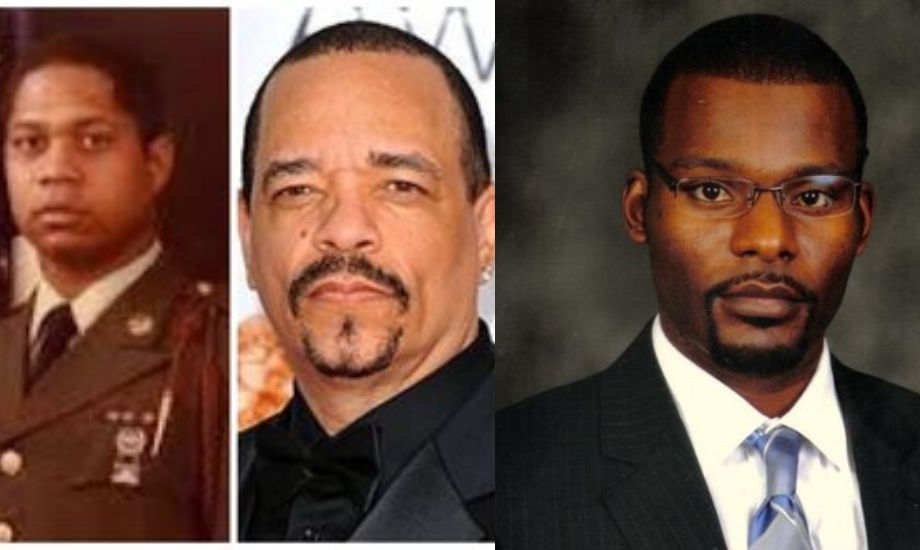
Solomon Marrow is best known as the father of Tracy Lauren Marrow, the influential rapper, actor, and musician better known as Ice-T. Although Solomon never became a celebrity himself, interest in his life has continued because of his connection to one of the most recognizable figures in hip-hop and television. Public information about Solomon is limited, but available biographical and genealogical records provide a picture of a working-class father who spent much of his life supporting his family through skilled mechanical work.
“solomon marrow” lived during a period when many African American families were building lives in northern American cities after moving away from the South. He and his wife, Alice Marrow, raised their son in New Jersey, first in Newark and later in Summit. Solomon worked as a conveyor-belt mechanic for the Rapistan Conveyor Company, a detail repeated in biographical accounts of Ice-T’s early life.
His story became especially significant because of what happened to his family. Alice died in January 1967, when their son was only nine years old. Solomon then became a single father for approximately four years. His own death in May 1971 left Ice-T orphaned at the age of 13. These early losses became an important part of the background to Ice-T’s later life and career.
Who Was Solomon Marrow?
Solomon Marrow was an African American working-class man from New Jersey who became known publicly because he was the father of Ice-T. Genealogical and biographical records identify him as Solomon Edward Marrow Jr., with February 19, 1910, commonly reported as his date of birth. Wikidata also associates Solomon Marrow with a record identifying him as the father of Ice-T and gives a life span of 1910 to 1971.
Unlike his famous son, Solomon did not live a public entertainment-industry life. He was not a rapper, actor, producer, or recording artist, and there is no reliable evidence that he sought public recognition. His occupation was connected to mechanical and industrial work, with sources describing him as a conveyor-belt mechanic at Rapistan Conveyor Company. That profession placed him within the working-class industrial workforce of mid-20th-century New Jersey.
Because Solomon died long before Ice-T became famous, there are few contemporary interviews or detailed profiles devoted to him. Much of what modern readers know comes from accounts of Ice-T’s childhood and family history. This means some details repeated online should be treated carefully, particularly when different websites provide conflicting dates or unsupported personal claims.
Solomon Marrow’s Early Life and Background
Publicly available information about Solomon Marrow’s childhood is relatively sparse. Genealogical records connect him with the Marrow family in New Jersey and identify his parents as Solomon Marrow Sr. and Ethel Schuyler Marrow. A genealogical entry gives his birth date as February 19, 1910, while another biographical source repeats the same date and identifies New Jersey as his birthplace.
The lack of detailed documentation is understandable given the period in which Solomon lived. He was not a public official or entertainer whose daily activities were extensively reported by newspapers. As a result, there is little dependable information available about his education, childhood interests, siblings, or early career. Online articles sometimes fill these gaps with descriptions of his personality, but those claims are generally not supported by primary documentation.
What is much clearer is the working-class environment in which he built his adult life. Solomon eventually established a family with Alice Marrow and worked in an industrial occupation. His story therefore provides an important social context for understanding Ice-T’s childhood. Before his son became associated with West Coast hip-hop, gangsta rap, Body Count, and television acting, he was the child of a New Jersey family supported by an industrial worker.
Solomon Marrow and Alice Marrow’s Marriage
Solomon Marrow was married to Alice Marrow, who is remembered primarily as Ice-T’s mother. Accounts of the family identify Alice as having a Louisiana Creole background, while Solomon was African American. Together they raised their son, Tracy Lauren Marrow, who was born in Newark, New Jersey, on February 16, 1958.
The couple’s family life appears to have been relatively private. They were not wealthy celebrities, and neither parent had a public entertainment career. Solomon’s work as a conveyor-belt mechanic provided the family’s primary connection to industrial employment, while Alice was closely involved in raising their son. Later accounts describe their household as structured and disciplined, although detailed primary documentation about their private relationship is limited.
The family initially lived in Newark before moving to Summit, New Jersey. That distinction is important because some online biographies simplify Ice-T’s childhood by saying he was raised entirely in Newark. Available accounts indicate that he was born in Newark and later spent part of his childhood in Summit, where experiences with race and social identity became important to his understanding of the world.
Solomon Marrow’s Career as a Mechanic
One of the most consistently reported facts about Solomon Marrow is his occupation. He worked as a conveyor-belt mechanic for the Rapistan Conveyor Company, a job that involved industrial machinery rather than entertainment or business leadership. Multiple biographies of Ice-T identify this occupation when discussing his father’s role in the family.
Industrial mechanical work was an important source of employment for many American families during the middle decades of the 20th century. In Solomon’s case, the job appears to have provided a steady working life while he raised his family in New Jersey. Some modern biographies describe him as having worked for the company for decades, although the precise dates of his employment are not established by a primary employment record publicly available today.
Solomon’s occupation also helps explain why there is so little information about his personal wealth. There are no credible public records establishing a specific salary, savings balance, property portfolio, or net worth. Unlike a modern celebrity whose income may be tracked through contracts and business ventures, Solomon was a private industrial worker whose financial life remained outside the public record.
Solomon Marrow and Ice-T’s Childhood
Solomon became the father of Tracy Lauren Marrow, who would later adopt the professional name Ice-T. Tracy was born in Newark in 1958, and the family later moved to Summit, New Jersey. Accounts of Ice-T’s childhood describe Solomon as an important figure during his son’s early years, particularly after the death of Alice Marrow.
Ice-T’s childhood also included an early encounter with racial prejudice. Accounts of his early life describe an incident when he noticed that some white children treated darker-skinned Black children differently. When he discussed the experience with his mother, Alice reportedly responded in a way that encouraged him not to allow other people’s ignorance to define him. While this particular memory is more directly associated with Alice, it forms part of the family environment in which Solomon was raising his son.
The family’s move from Newark to Summit gave young Tracy a different experience from what many people might assume when they hear about Ice-T’s New Jersey childhood. His later music would explore race, street life, inequality, violence, and survival, but those themes cannot simply be attributed to one event or one parent. His childhood included family structure, parental loss, relocation, and eventually a major transition to Los Angeles after his father’s death.
What Happened to Solomon Marrow’s Wife Alice?
Alice Marrow died in January 1967, reportedly from a heart attack. At the time, Ice-T was approximately nine years old and in the third grade. Her death changed the family’s circumstances dramatically because Solomon was suddenly responsible for raising his young son as a single parent.
Accounts of the period say that Solomon continued raising Tracy for several years with assistance from a housekeeper. This period is especially important because it shows that Solomon’s role in his son’s life continued after Alice’s death. He was no longer simply one of two parents in the household; he became the surviving parent responsible for maintaining stability for a child who had already experienced a major loss.
Alice’s death is sometimes presented online with exaggerated or invented details about her life. A careful biography should avoid treating every claim on celebrity websites as established fact. The strongest recurring information is that she was Ice-T’s mother, was married to Solomon, died in January 1967, and left her young son in Solomon’s care.
Solomon Marrow’s Death in 1971
Solomon Marrow died on May 18, 1971, according to genealogical and biographical records that identify the date and place as Summit, Union County, New Jersey. Sources commonly give his age as 61.
His death occurred roughly four years after Alice’s death and had a devastating effect on his son. Ice-T was about 13 years old when Solomon died, meaning he lost both parents while still a child. Contemporary-style biographical accounts say that after Solomon’s death, Tracy eventually went to live with relatives in Los Angeles, where his adolescence unfolded in a very different environment.
The sequence of events is one of the most important facts in the Solomon Marrow story. Alice died when Tracy was nine, Solomon raised him for several more years, and Solomon then died when Tracy was 13. This early loss of both parents became part of the personal history behind a young man who would later build a career by telling stories about street life, survival, identity, and social realities.
How Solomon Marrow Influenced Ice-T
It would be too simplistic to claim that Solomon directly caused Ice-T’s later success. Ice-T’s career was shaped by many experiences, including his adolescence in Los Angeles, his exposure to music, his time in the U.S. Army, his development as a rapper, and his later work in acting and heavy metal. Nevertheless, Solomon’s role as his father and primary caregiver during an important part of his childhood remains significant.
Solomon also represented a very different world from the one his son eventually entered. He worked a conventional industrial job, maintained a family, and lived outside the entertainment spotlight. Ice-T later became a pioneering figure in gangsta rap, co-founded Body Count, and built a long-running acting career. The contrast between his father’s working-class life and his own public career is one of the more interesting aspects of the family’s history.
The emotional importance of Solomon’s death should also not be overlooked. Losing both parents before adulthood forced Ice-T to experience independence and family change at a very young age. While it would be impossible to measure exactly how much those experiences influenced his creative work, they form an important part of the background to his later life and explain why searches for “Solomon Marrow Ice-T father” continue to attract interest.
Solomon Marrow’s Legacy and What We Know Today
Today, Solomon Marrow is primarily remembered because of the extraordinary career of his son. Ice-T went on to become one of the important voices in American hip-hop, later expanding into acting and television. His family history is therefore frequently revisited by people interested in his childhood, parents, real name, New Jersey upbringing, and path to fame. Public biographical records consistently identify Solomon as Ice-T’s father.
Solomon himself did not accumulate a public celebrity profile, and there is no trustworthy evidence for a specific “Solomon Marrow net worth.” Claims about his wealth should be approached carefully because he was a private mechanic whose income and personal assets were not publicly documented. The available evidence supports his occupation and family relationships, but it does not support a precise financial figure.
The strongest legacy associated with Solomon is therefore not money or fame but family. He was a father who worked in an industrial profession, raised his son after the death of his wife, and remained an important part of Ice-T’s childhood until his own death in 1971. Although Solomon Marrow’s life is less documented than his son’s, his place in Ice-T’s family history makes him an important figure for understanding the personal story behind one of hip-hop’s most enduring careers.

Conclusion: The Story of Solomon Marrow
Solomon Marrow lived a private working-class life, far removed from the celebrity world his son would eventually enter. Born in the early 20th century and associated with New Jersey, he worked as a conveyor-belt mechanic at the Rapistan Conveyor Company and raised his family with Alice Marrow. Their son, Tracy Lauren Marrow, was born in Newark in 1958 and would later become internationally known as Ice-T.
The defining tragedy of Solomon’s family life came when Alice died in January 1967. Solomon then raised his nine-year-old son for approximately four more years before dying himself in May 1971. Ice-T was only 13, leaving him without either parent during his teenage years.
Although much of Solomon Marrow’s personal life remains undocumented, the facts that are available tell a meaningful story. He was an industrial worker, husband, father, and the parent of a future cultural icon. His name may appear in searches because of Ice-T’s fame, but Solomon’s own story deserves to be understood on its own terms. The most trustworthy accounts do not need to exaggerate his wealth, lifestyle, or personality; the documented history of his family, work, and early death is already significant enough to explain why Solomon Marrow remains part of Ice-T’s enduring biography.