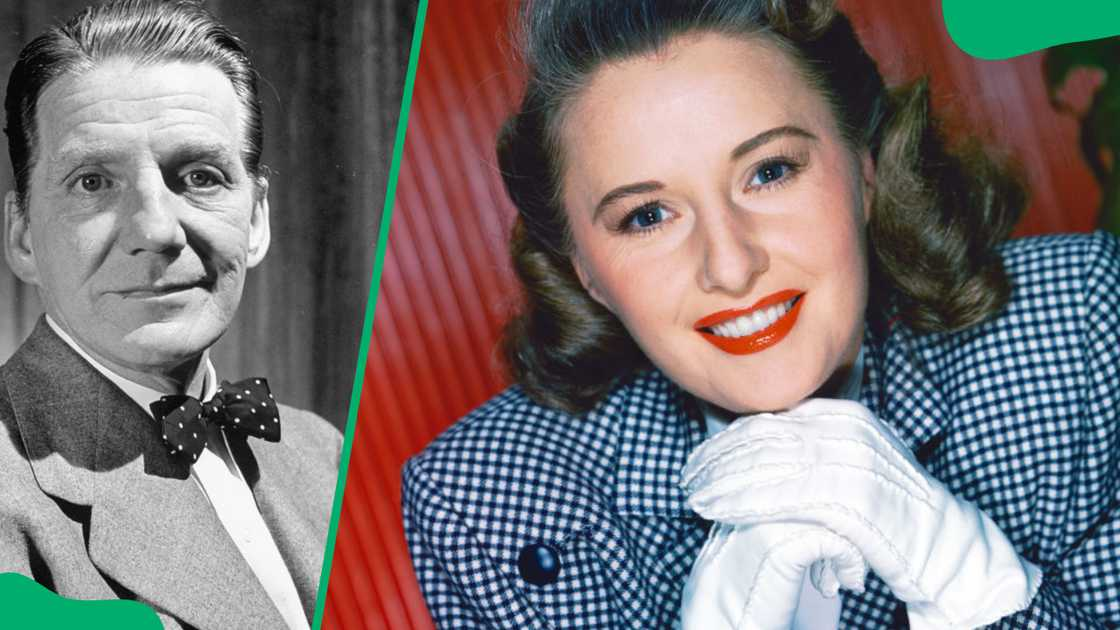
Anthony Dion Fay is remembered today primarily because of his connection to one of classic Hollywood’s most famous actresses, Barbara Stanwyck. Adopted by Stanwyck and her first husband, actor and vaudeville performer Frank Fay, Anthony grew up inside a Hollywood family while remaining largely unknown to the public himself. Unlike his mother, he did not establish a career in entertainment, and much of his adult life remained outside the spotlight.
The story of Anthony Dion Fay is especially interesting because it reveals a very different side of Hollywood fame. Barbara Stanwyck built a celebrated career that lasted for decades, but her relationship with her only child became complicated and eventually distant. Contemporary newspaper reporting and later biographical research provide some insight into that relationship, although many details repeated by modern websites are less firmly documented. The Los Angeles Times confirmed that Stanwyck and Frank Fay adopted a son named Anthony Dion Fay, while biographer Victoria Wilson later interviewed Anthony extensively during her research into Stanwyck’s life.
Understanding Anthony Dion Fay requires separating documented history from speculation. His adoption, his connection to Barbara Stanwyck and Frank Fay, his childhood experiences, his later estrangement from Stanwyck, and his interviews with researchers are relatively well established. Other details, including some claims about his birth name, occupation, private family life, and death, appear mainly in secondary online sources and should be treated cautiously.
Who Was Anthony Dion Fay?
Anthony Dion Fay was the adopted son of Barbara Stanwyck and Frank Fay. The couple adopted him in 1932 while they were married and living in Hollywood. Stanwyck was already building her career, while Frank Fay was an established stage and entertainment performer. Their adoption brought Anthony into a highly visible Hollywood household, although his own life would ultimately develop far away from the entertainment industry. The Los Angeles Times specifically identified Anthony Dion Fay as the son Stanwyck and Frank Fay adopted.
Anthony was also commonly known as Tony Fay. His full name is confirmed by Victoria Wilson, author of A Life of Barbara Stanwyck: Steel True, 1907–1940. Wilson explained that although he had been named Dion after an actor and playwright admired by Frank Fay, he did not normally use Dion and instead went by Tony. Wilson also spent approximately two years speaking with Tony while researching Stanwyck, making his firsthand recollections an unusually important source for understanding the family.
Because Anthony did not become a movie or television personality, his historical importance comes almost entirely from his place in Barbara Stanwyck’s personal life. He was her only child, and his experiences provide a rare perspective on the actress away from the screen. His story is therefore not simply a celebrity-family curiosity. It is also a record of a complicated parent-child relationship that became increasingly distant as he grew older.
When Did Barbara Stanwyck Adopt Anthony Dion Fay?
Barbara Stanwyck and Frank Fay adopted Anthony in 1932. Stanwyck had married Frank Fay in 1928, and the couple subsequently moved to Hollywood as Fay pursued opportunities in the film business. Their marriage eventually ended in divorce in 1935, but the adoption had already made Anthony part of Stanwyck’s family. Biography.com likewise identifies Dion Anthony Fay as the son Stanwyck and Frank Fay adopted in 1932.
The adoption took place during an important period in Stanwyck’s professional development. She had transitioned from stage work into film and was rapidly becoming a major Hollywood actress. Her personal life, however, was considerably more complicated than the glamorous image associated with movie stardom. The family’s circumstances changed significantly after Stanwyck and Frank Fay divorced, leaving Anthony to grow up primarily in his mother’s household and within the unusual environment created by her career.
Modern websites often provide extremely specific information about Anthony’s biological parents and birth circumstances. Some claim that he was born under another name and was adopted when he was approximately ten months old. Although these details are widely repeated, they are not as firmly supported by major contemporary sources as the basic fact of his adoption. A trustworthy Anthony Dion Fay biography should therefore distinguish between documented adoption history and details that remain uncertain.
What Was Anthony Dion Fay’s Childhood Like?
Anthony’s childhood was strongly shaped by the demands of growing up in a famous Hollywood family. According to later accounts based on his own recollections, he spent periods away from his mother and attended boarding and military schools. In a 1960 column by journalist Paul V. Coates, Tony Fay said that he had been sent to military school in Indiana during his first year of high school. He also described himself as a poor student who had not taken full advantage of the education his mother was providing.
Victoria Wilson’s later research adds another layer to this story. In her interview about writing Stanwyck’s biography, Wilson said that Tony spoke to her at length about his childhood and family experiences. She explained that Stanwyck had strict ideas about education and had concerns about his weight and grades. Wilson also emphasized that she did not want to judge Stanwyck, instead presenting the circumstances as part of a complicated family dynamic.
This distinction matters because many modern articles describe Anthony’s childhood using emotionally loaded terms such as “abandoned,” “unloved,” or “neglected.” His own recollections clearly indicate that he experienced separation and conflict, but describing his entire childhood with a single dramatic label can oversimplify the historical record. His story appears to have involved difficult expectations, periods away from home, educational struggles, and a deteriorating relationship with his mother.
Why Did Anthony Dion Fay Become Estranged From Barbara Stanwyck?
The estrangement between Anthony and Barbara Stanwyck is the central reason people continue searching for his biography. According to Tony’s 1960 account, he had not seen his mother after she sent him to military school in Indiana, except for a lunch meeting arranged by an uncle in 1952. He said that by the time of the newspaper interview, he had made a point of not identifying himself with his famous mother.
Victoria Wilson’s research provides additional context. Wilson said that Stanwyck had rigid expectations concerning education and became increasingly frustrated with Anthony’s grades and weight. She described a pattern in which Stanwyck sent him away, while his behavior became more difficult in response. Wilson’s account does not present the situation as a simple story of one person being entirely responsible. Instead, it portrays a relationship affected by conflicting expectations, family circumstances, and the pressures of Stanwyck’s career.
The 1952 lunch is particularly important because it appears to have been one of the few later meetings between mother and son. Tony’s 1960 comments indicate that the relationship had already become deeply distant. Later online accounts sometimes add dramatic dialogue or emotional conclusions to this meeting, but those details are not equally well supported. The safest historical interpretation is that the meeting demonstrated how strained their relationship had become rather than proving a particular conversation or motive.
What Did Anthony Dion Fay Say About His Mother?
Anthony’s own words are among the most valuable pieces of evidence available about his relationship with Barbara Stanwyck. In the 1960 Paul V. Coates column, he explained that he did not usually identify himself as Stanwyck’s son. He also said that his separation from her followed his poor performance at school and her decision to send him away to military school.
His comments also show that the story was more complicated than simply blaming his mother. Tony acknowledged that he had been a poor student and admitted that he had not taken advantage of the educational opportunities available to him. He reportedly understood that Stanwyck expected him to make use of the education she was paying for. This self-reflection is important because it gives his story more nuance than some modern celebrity biographies provide.
Decades later, Tony again became an important firsthand source when Victoria Wilson researched Barbara Stanwyck’s biography. Wilson said that she spoke with him for two years and considered him “totally important” to her work. His recollections therefore helped researchers understand aspects of Stanwyck’s family life that were not easily available from the actress’s public interviews or professional records.
What Happened to Anthony Dion Fay as an Adult?
Unlike Barbara Stanwyck, Anthony Dion Fay did not pursue a recognizable Hollywood career. His adult life was largely private, and reliable public information about his professional activities is limited. Some modern websites describe him as having worked in various ordinary jobs, but these claims are not consistently supported by authoritative records. His 1960 newspaper interview does establish that he was an adult with a wife and child at that point in his life.
Anthony also occasionally came into public attention because journalists recognized his connection to Stanwyck. A 1960 Paul V. Coates column reported that Tony had been arrested in connection with an allegation involving the sale of lewd material to teenagers. The article said he initially denied being Barbara Stanwyck’s son before eventually acknowledging his identity. It also quoted him explaining that he was trying to protect his wife and child rather than rely on his mother’s fame.
That episode is part of the historical record, but it should not become the defining feature of his life. Anthony was a private individual who happened to be the son of a famous actress. Reducing his entire biography to a criminal allegation would ignore the much larger story of his adoption, childhood, education, family relationships, and later role as a source for Stanwyck biographical research.
Did Anthony Dion Fay Have a Wife and Children?
There is evidence that Anthony Dion Fay had a family of his own. In his 1960 interview with Paul V. Coates, Tony specifically said that he had a wife and a child. That contemporary statement is stronger evidence than many later biography websites that provide additional family details without identifying their sources.
Some modern profiles claim that Anthony had one son and provide additional information about his marriage and descendants. However, these details are difficult to verify through major historical publications or clearly identified primary records. For that reason, it is more responsible to say that Anthony was married and had at least one child by 1960 rather than presenting every modern internet claim about his family as established fact.
His own comments suggest that his immediate family was important to him. When discussing the 1960 legal trouble, he specifically referred to his wife and child as people he was trying to protect. That statement also illustrates the distance between his private family identity and the celebrity identity attached to his mother. Anthony appeared to see himself as a husband and father rather than as an extension of Barbara Stanwyck’s fame.
When Did Anthony Dion Fay Die?
Genealogical databases currently associate Anthony Dion Fay with a birth date of February 5, 1932, in Los Angeles and a death date of May 17, 2006, in Van Nuys, Los Angeles. Ancestry’s indexed records show those dates under the name Anthony Dion Fay.
However, the quality of available documentation surrounding his death is weaker than the documentation concerning his connection to Barbara Stanwyck. A recent research-oriented biography notes that a detailed contemporary obituary or authoritative public record establishing the circumstances of his death was not located. His reported date of death can therefore be presented as a genealogical record, but claims about his cause of death should not be invented or treated as confirmed without stronger evidence.
This is an important distinction for anyone researching “Anthony Dion Fay death,” “Anthony Dion Fay obituary,” or “what happened to Anthony Dion Fay.” Search results can make an individual’s death appear extensively documented simply because multiple websites repeat the same information. Repetition, however, does not necessarily establish independent verification. In Anthony’s case, the reported 2006 death date is useful, while the circumstances surrounding his death remain comparatively obscure.
What Is Anthony Dion Fay’s Legacy?
Anthony Dion Fay’s legacy is closely tied to the complicated personal history of Barbara Stanwyck. He did not become a famous actor, producer, or television personality, yet his experiences became an important part of understanding the private life of one of Hollywood’s most respected performers. His story demonstrates how different a family’s private reality can be from the polished image presented to movie audiences.
His importance became particularly clear through Victoria Wilson’s research. Wilson did not simply rely on old newspaper stories when writing about Stanwyck; she spent extensive time speaking with Tony Fay. She described him as an important source and used his recollections to explore Stanwyck’s family relationships and personal history. That firsthand perspective gives Anthony a place in the historical record beyond being merely “Barbara Stanwyck’s son.”
Anthony’s life also illustrates the limitations of celebrity biography. Barbara Stanwyck’s professional achievements are extensively documented, from her film career to her television work and Academy recognition. Her private relationship with Anthony is much more difficult to reconstruct. The surviving evidence suggests a long period of estrangement, but it does not justify every dramatic claim now circulating online. His legacy is therefore best understood through documented testimony, contemporary reporting, and careful biographical research.
What Can We Reliably Say About Anthony Dion Fay Today?
The most reliable account of Anthony Dion Fay begins with a few central facts. He was adopted by Barbara Stanwyck and Frank Fay in 1932, was known as Tony Fay, and became Stanwyck’s only child. His childhood included educational difficulties and periods away from home, including military school in Indiana. His own 1960 account described a long separation from his mother and identified a 1952 lunch arranged by his uncle as their last known meeting at that stage of his life.
Later, Anthony became a valuable firsthand source for Victoria Wilson’s biography of Barbara Stanwyck. Wilson spent years speaking with him and used his memories to understand the family circumstances surrounding Stanwyck and her son. That makes Anthony’s testimony especially significant because it comes from someone who experienced the family relationship directly rather than from a distant observer.
At the same time, many details about Anthony’s later life remain uncertain. Genealogical records report that he died in 2006, but reliable public documentation about his final years and cause of death is limited. For readers searching for Anthony Dion Fay’s biography, the most trustworthy conclusion is not the most sensational one. He was a private man whose life was shaped by adoption into a famous Hollywood family, educational and family difficulties, a prolonged estrangement from Barbara Stanwyck, and later efforts by historians to preserve his firsthand memories.
Anthony Dion Fay’s story ultimately offers a human perspective on classic Hollywood. Fame surrounded him from childhood, but he did not pursue it for himself. His life was marked by a complicated relationship with his adoptive mother, periods of separation, and a later existence that remained largely outside public attention. His testimony nevertheless helped future generations understand the woman behind the famous Barbara Stanwyck image.
The available evidence also shows why responsible research matters. Some details about Anthony Dion Fay are well supported by contemporary newspapers, biographical research, and genealogical records, while other claims have been repeated online without clear documentation. Separating those categories makes his biography more accurate and respectful. Rather than turning his life into a sensational Hollywood tragedy, it is better understood as the complicated story of a private man whose connection to a legendary actress made his family history historically significant.